Sami, a 5CA agent, with his dog on the coast near Monastir, Tunisia.
The human touch behind every ticket
Sami’s workday starts before his shift does. He wakes at least two hours early, steps out for a morning walk and some sunlight in Monastir, the Tunisian coastal city where he lives, and only then sits down at his desk. Once he starts, the phone goes away and distractions are minimized.
It’s a routine built for focus, and it shows in how he works. Sami is an agent at 5CA, supporting customers in consumer electronics, and his work on a single case earned him internal recognition for going above and beyond. There is no secret formula behind it, just judgment, patience and ownership, applied consistently.
The timing is fitting. With Black Friday days away, new devices are about to be unboxed, set up and put to work, and for many customers the first person they turn to for help will be someone like Sami. Technology and process make that support faster, and he values both. But after years of conversations, he keeps coming back to something no tool can replace: “Sometimes, people simply need human contact, a little patience, and someone willing to help them navigate a situation they can’t handle on their own.”
How a first job became a calling
Sami’s belief in the human side of technical support didn’t come from a training manual. It grew out of a career that started by chance. He took his first role at one of the largest contact centers in his country to pay his way through university. “Little did I know that what started as a way to make ends meet would eventually shape a significant part of my professional journey.”
He doesn’t pretend the work is easy. What kept him going was the impact: “You may only be making a small difference in someone’s day, but sometimes that’s all it takes to turn a frustrating experience or situation into a positive one.”
The job taught him communication, problem-solving and adaptability. Above all, it taught him empathy, which he sees as something you practice: “Empathy isn’t just an emotion; it’s a skill.”
After several years across different roles, projects and companies, he joined 5CA, where he has now worked for three years. Today, that work happens from his home in Monastir.
Focus at work, a life beyond it
Monastir is a coastal city in Tunisia, and Sami is glad to call it home, “especially with all the sunshine we get throughout most of the year.” 5CA has been remote-first for more than two decades, so his routine will feel familiar to anyone who works from home: an early start, a focused shift, and a life outside of it.
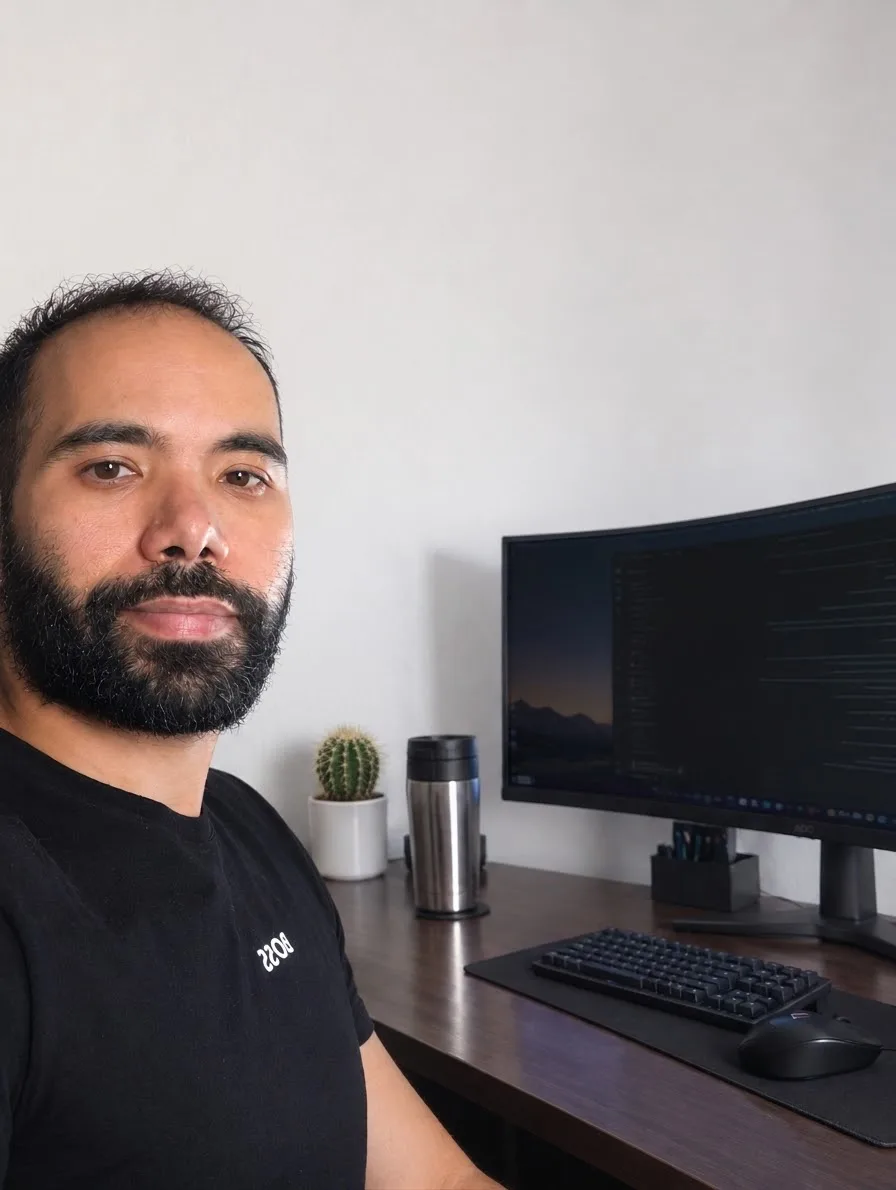
Sami at his home office desk.
Remote doesn’t mean alone, though. “Whenever I need a little break or feel like having a chat, I can always reach out to one of my teammates.” They talk about work, swap ideas and share memes. “It keeps you from feeling lonely or disconnected in a virtual world and reminds you that there are real people on the other side of the screen.”
After work, he makes a point of getting outside. That might mean the gym, a run, coffee with friends or a walk with his dog. “Stay focused while I’m working, but make sure there’s a life waiting for me once I close my laptop.”
The phone call that went beyond the procedure
That focus carries into every conversation. Sometimes it also means looking beyond the standard process.
Procedures keep technical support consistent, and Sami values them. He also thinks they’re tools rather than limits. “Whenever there’s room for flexibility, I believe we should be willing to look beyond the standard process and consider what would genuinely make a difference for that particular customer.”
That is what happened in the case that earned him his recognition. A customer who needed technical help asked for a phone call, and Sami saw that this was the right way to help. He picked up the phone and took ownership of the case from there.
When the next step called for a proof of purchase, the customer asked whether Sami could contact the retailer for them, and he did. Reaching out to the retailer on a customer’s behalf isn’t part of the standard procedure, “but sometimes you find yourself in a situation where you realize you might be the only person in a position to make things easier for someone.” The retailer responded promptly with the invoice, and Sami stayed with the customer to see it through, with “a bit of patience and some back-and-forth,” until the case was resolved. The customer’s reply was several thank-you emails.
At 5CA, Sami says, that kind of initiative is welcome: “Taking such initiatives isn’t just permitted at 5CA; it’s something that’s encouraged and appreciated.” He sees this as the core of a customer-centric culture, where people have “the confidence to use their judgment, take ownership, and make a difference. “Procedures should be there to help us deliver a great customer experience, not prevent us from doing so.”
What people really want from support
It comes back to one idea. After years of conversations, Sami puts it simply: “People want to feel valued.”
His example is a supermarket checkout. One cashier barely looks up, scans your items and moves on. Another smiles, asks how your day is going and wishes you a good one. The service is the same, but the experience isn’t. “Customer support is no different, regardless of the channel you’re using.”
People want to be listened to, understood and acknowledged. Then they want to see action. He has also noticed that customers increasingly expect a personal experience. They don’t want to feel “like just another ticket number or case in a queue.”
When a device doesn’t work as expected, the way the conversation begins matters. Sami’s approach is to change how the customer sees the conversation, from “I’m calling to complain about a product that isn’t working” to “I’ve reached someone who understands the product and is genuinely here to help me. Let’s figure this out together.” Empathy builds trust, but it has to come with action: listen, acknowledge, explain what you can do and take ownership of the next steps.
5 small habits that turn a solved ticket into a great experience
Feeling valued is built in small moments. “It’s often the little things that make the biggest difference.” These are the five habits Sami relies on in every technical support conversation:
- Smile when you pick up the interaction. The customer can’t see it, but they can hear it. It changes your tone and your own mood before the conversation starts.
- Practice active listening. Don’t just wait for your turn to speak. Short cues like “Absolutely” or “I see what you mean” show you’re following.
- Use the customer’s first name. Where it fits, it makes the conversation feel personal rather than transactional.
- Say “I” instead of hiding behind “we.” “I’ll look into this for you” signals ownership. It tells the customer that a real person is responsible, not an anonymous department.
- Explain what happens next and leave the door open. Tell them the next steps and when to expect an update, and let them know you’re there if they need more help. “Never leave someone wondering what happens after the conversation ends.”
“Great customer experiences aren’t always created by extraordinary gestures. More often, they’re the result of consistently getting the little things right.”
Why a device is never just a device
Those habits matter most when the product is something people depend on. In Sami’s world, consumer electronics are never just gadgets. People rely on their devices for work, communication, learning and daily routines. “When something goes wrong, it’s not necessarily just an inconvenience. It can disrupt an important part of someone’s day.”
Premium brands raise expectations further. Customers expect the support to match the quality of the product, which means timely help, clear communication and attention to detail. “We’re not simply troubleshooting devices or following procedures. We’re helping people get back to using something that plays an important role in their lives.”
The operation behind every reply
Getting that right takes more than one person. A customer sees one email reply or one phone call. Behind it is a much larger operation, “an army of people working behind the scenes, around the clock.” It matters most when new devices reach many homes at once, as in the days around Black Friday.
- Routing: each ticket goes to an agent with the right skills and expertise.
- Preparation: agents complete thorough training and onboarding before they handle customer requests.
- Process: procedures and policies are developed, refined and updated over the years.
- Quality: a handled case may go through Quality Assurance to check it meets the expected standard.
- Escalation: some cases involve senior agents, specialist teams or management to reach the right outcome.
“It’s the combined effort of people, expertise, processes, and technology, all working towards one goal: delivering the best possible customer experience.”
The people behind the promise
All of that machinery runs best with people at the center. As more companies use automation to speed up resolutions, Sami doesn’t see technology as the enemy. “Technology can make us faster and more efficient, and that’s a good thing. But it shouldn’t come at the expense of the human element.”
It’s what he’d most like brands to know. Behind every interaction is a team of people who care about the work. His 5CA colleagues come from different backgrounds and cultures, but they share “a genuine commitment to delivering excellence.” They don’t think of a customer as just belonging to a brand. “They take ownership of that customer’s experience as if it were their own.”
He has seen colleagues go the extra mile to make sure an issue is fully resolved, “not because someone is watching or because it’s written in a procedure, but because they genuinely care about getting things right.”
“They’re not just agents handling tickets or answering calls. They’re individuals bringing their expertise, dedication, and human qualities to every interaction. And ultimately, they’re the ones who bring a brand’s promise to life.”
About 5CA
5CA is known for gaming, and the same approach applies to the consumer electronics brands and other brands it supports beyond it. That is what we mean by Fan-Made CX: people who care about the product, the brand and the person on the other side as much as the customer does.
As new devices arrive in homes this Black Friday, the person who helps set them up may well be someone like Sami.
Want support built by people who care this much? Talk to our team
FAQ
What do customers want when they contact technical support?
They want to feel valued. That means being listened to, understood and acknowledged, followed by clear action. Customers also increasingly expect a personal experience rather than being treated as a ticket number.
Why does human support matter for consumer electronics?
People rely on their devices for work, communication, learning and daily routines, and premium brands raise expectations further. Customers expect timely help, clear communication and attention to detail.
How can a support agent turn a solved ticket into a great experience?
Small habits make the difference: smile when you pick up, listen actively, use the customer’s first name, say “I” to show ownership, and explain what happens next. Consistency matters more than grand gestures.
How do you build a great experience when technology stops working?
Start with empathy so the customer feels heard. Then turn the conversation into a collaboration: explain what you can do and take ownership of the next steps.
Does automation replace human customer support?
Automation makes support faster and more efficient, but some moments still need a person who brings patience and takes ownership.
Does 5CA support brands beyond gaming?
Yes. 5CA is known for gaming and also supports brands beyond it, including consumer electronics brands.
What is Fan-Made CX?
Fan-Made CX is 5CA’s approach to customer experience. Support is delivered by people who care about the product and the customer, and who take ownership of each customer’s experience as if it were their own.